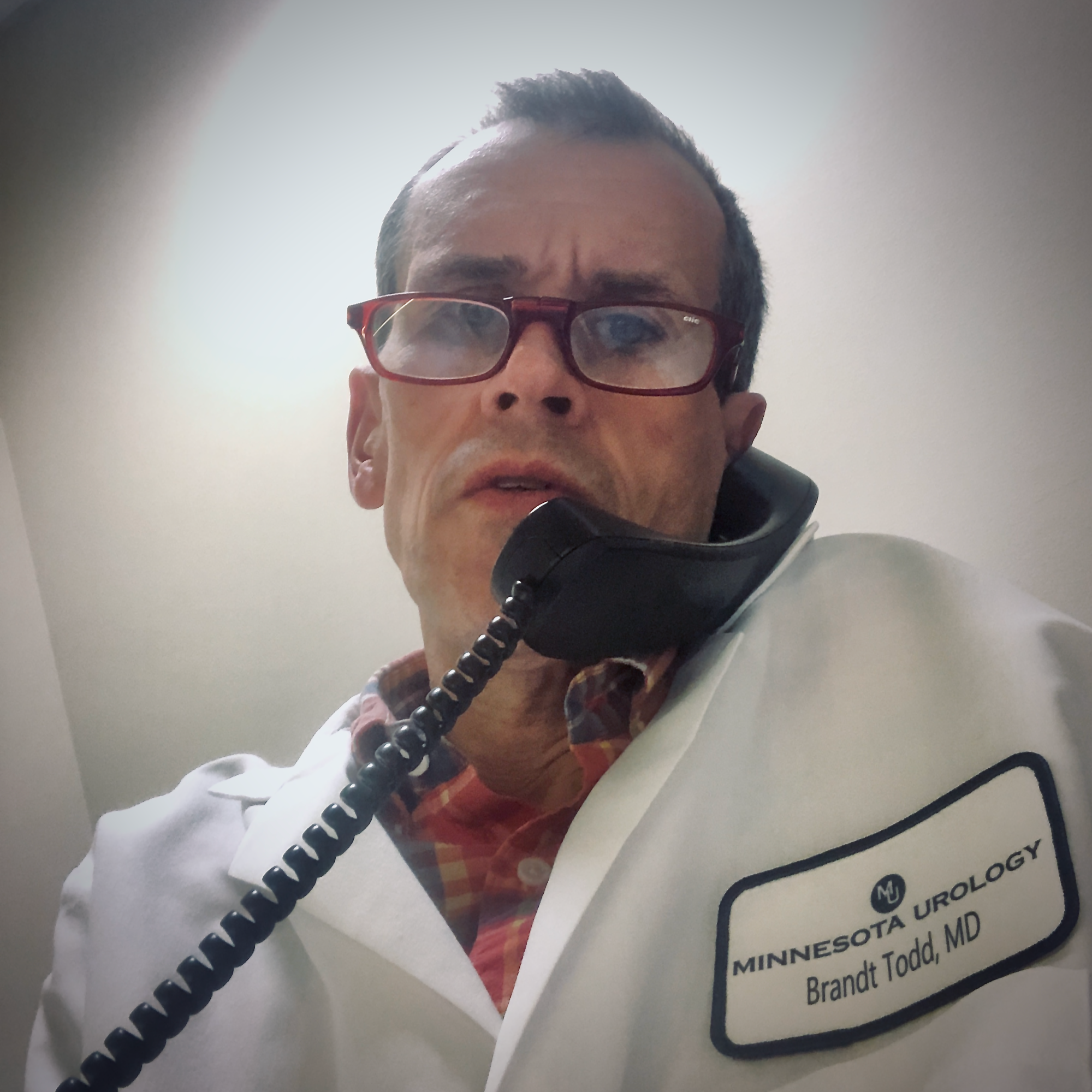
Your urinary tract is constantly working, making urine, balancing your electrolytes, regulating calcium balance and blood pressure within your body. Most people don’t think about the urinary tract until something goes terribly wrong: a kidney stone, pain in the pelvis, blood in the urine, burning or pain with urination, infertility, or a cancer diagnosis. That’s when you need a good urologist.
A urologist is a doctor who specializes in the genital-urinary tract: kidneys, ureters, bladder, prostate, penis, urethra, and testicles. We are primarily a surgical specialty. We treat cancers of the kidney, bladder, prostate and testes. We treat kidney stones, incontinence, impotence, voiding and pelvic floor dysfunction. We treat BPH or the enlarged prostate. We treat infertility, infections, voiding dysfunction associated with neurologic disease. We treat the old and the young, women as well as men. And when you can’t pee? Yep. We are there for that too.
Treatment of urologic disease goes back to antiquity. Bladder stones were a common problem, often requiring high-risk procedures to remove the stones. I will not cut for stone, wrote Hippocrates in his famous oath, instead leaving it to the barber-surgeons, practitioners of the art. Even then treatment of urologic disease required a specialized physician.
Hugh Hampton Young is one of “Fathers” of urology, starting his illustrious career when, at Johns Hopkins, Chief of Surgery William Halsted assigned him to run the genito-urinary surgery ward at the hospital.
“I don’t know much about genito-urinary surgery,” Young would protest.
“I think you could learn,” was Halsted’s reply.
And so, Young did learn about the genitourinary tract.
Hugh Hampton Young would learn and teach others, foundthe Journal of Urology and other traditions, creating a surgical specialty that continues to work collaboratively to change and improve urologic care for patients. He would take a special interest in the prostate gland and make great strides in treating its diseases. In 1906, with Halsted’s help, he would be the first to remove a prostate for the treatment of prostate cancer. A prostate may make a man old, the old joke goes, but it made Hugh Hampton Young.
From its very beginning forward Urology is a progressive field, introducing and employing many new innovations to medicine. Robotics, the use of lasers, and other minimally invasive techniques often are employed in urology first. Urologists, by training and instinct, are thoughtful, cautious innovators.
Because of the sensitive nature of the diseases we treat, urologists must also develop or possess personal skills to help our patients. We must be quiet, listening without judgement. We must be compassionate and empathetic. We must be capable and competent to be able to give patients the highest quality care.
Why did you choose urology, doc?