
daVinci Robotic Simple Prostatectomy FAQs
What is the diagnosis or pathology being treated by this procedure or surgery?
1
A SIMPLE prostatectomy treats BPH (Benign Prostatic Hyperplasia or Enlarged Prostate). The BPH causes obstruction from the bladder. Removal of the BPH tissue (this does not remove the entire prostate) relieves the obstruction.
CLICK HERE to learn about BPH/Enlarged Prostate
Can you describe the procedure or draw a picture?
2
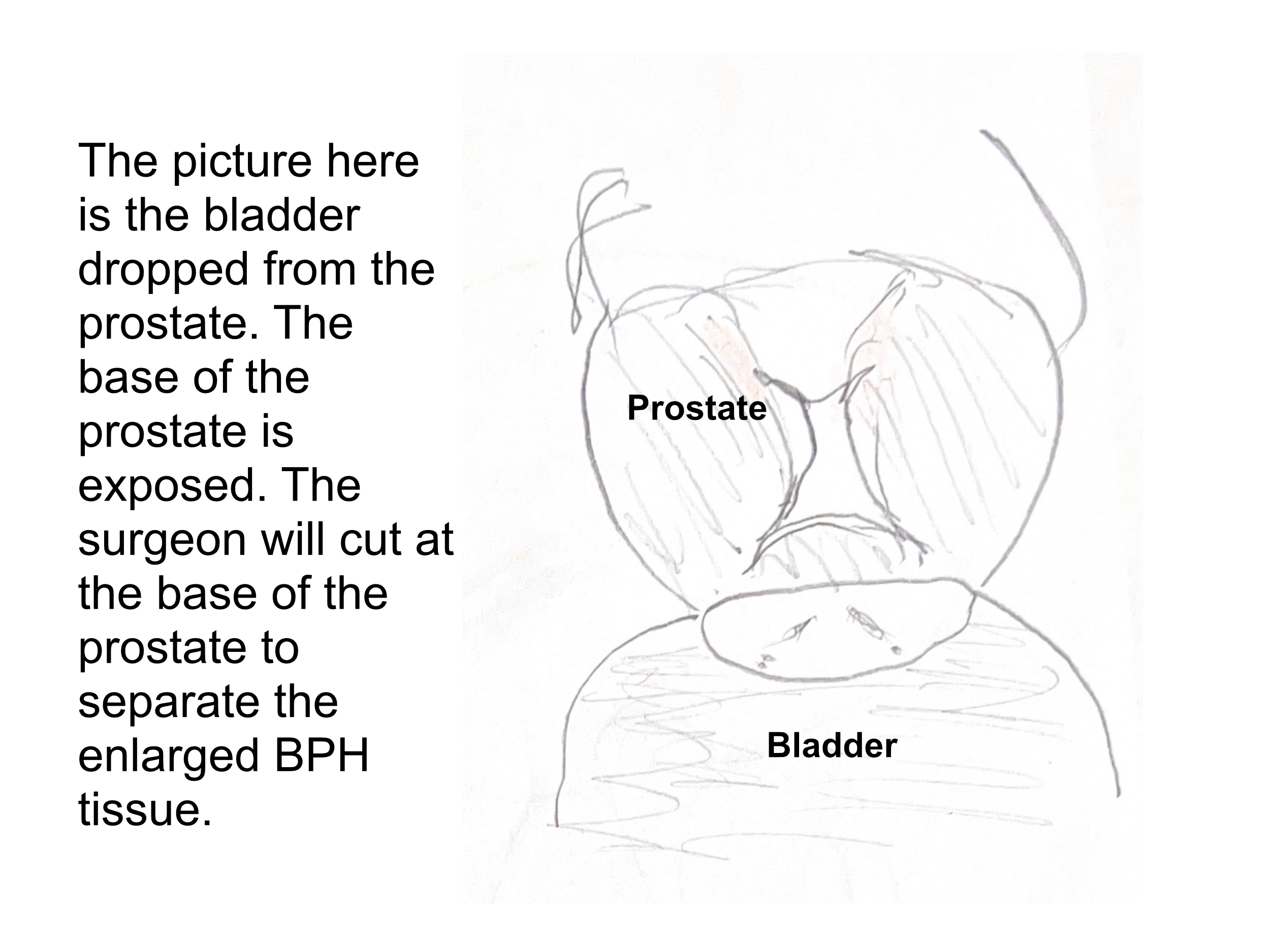
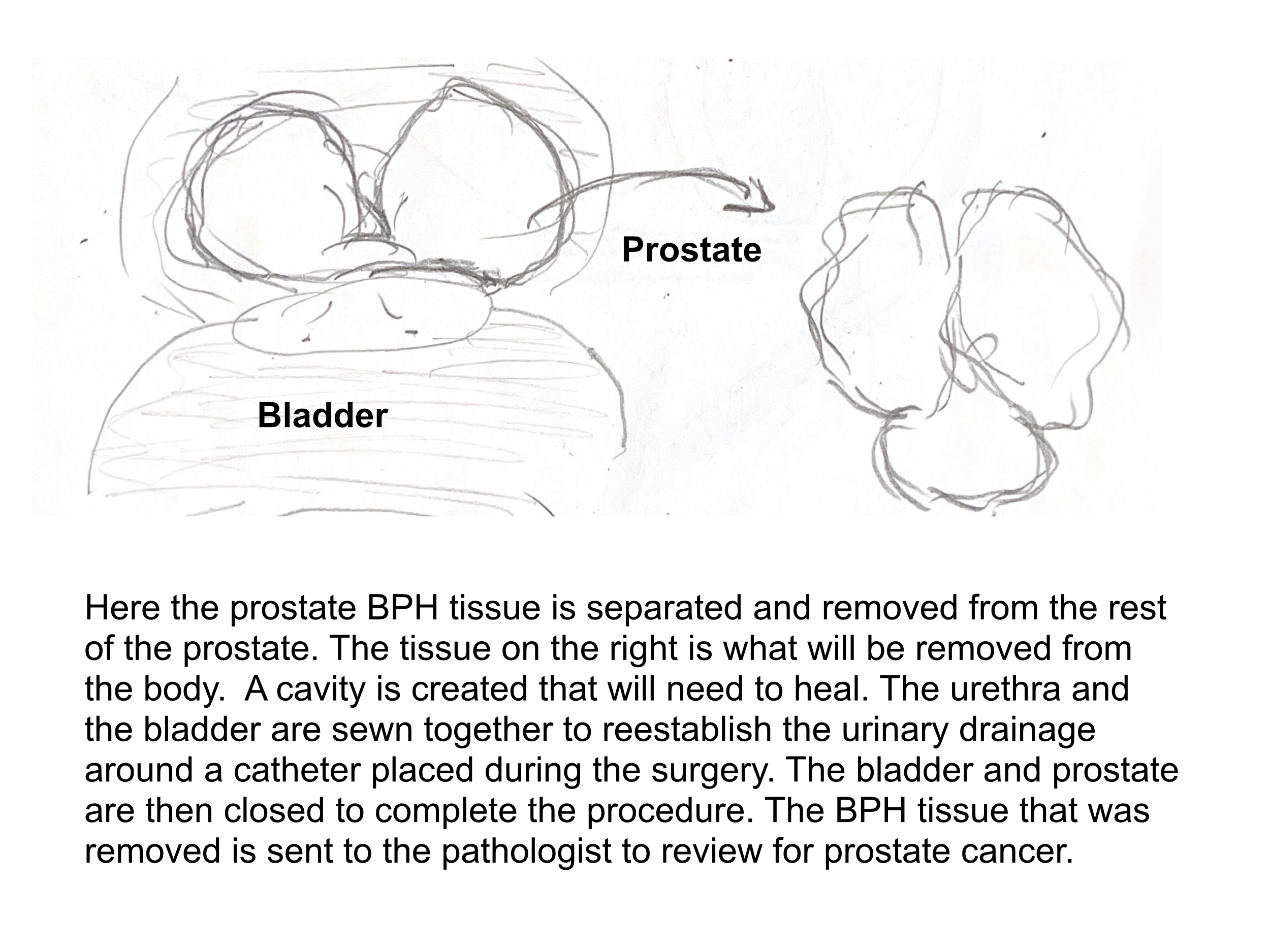
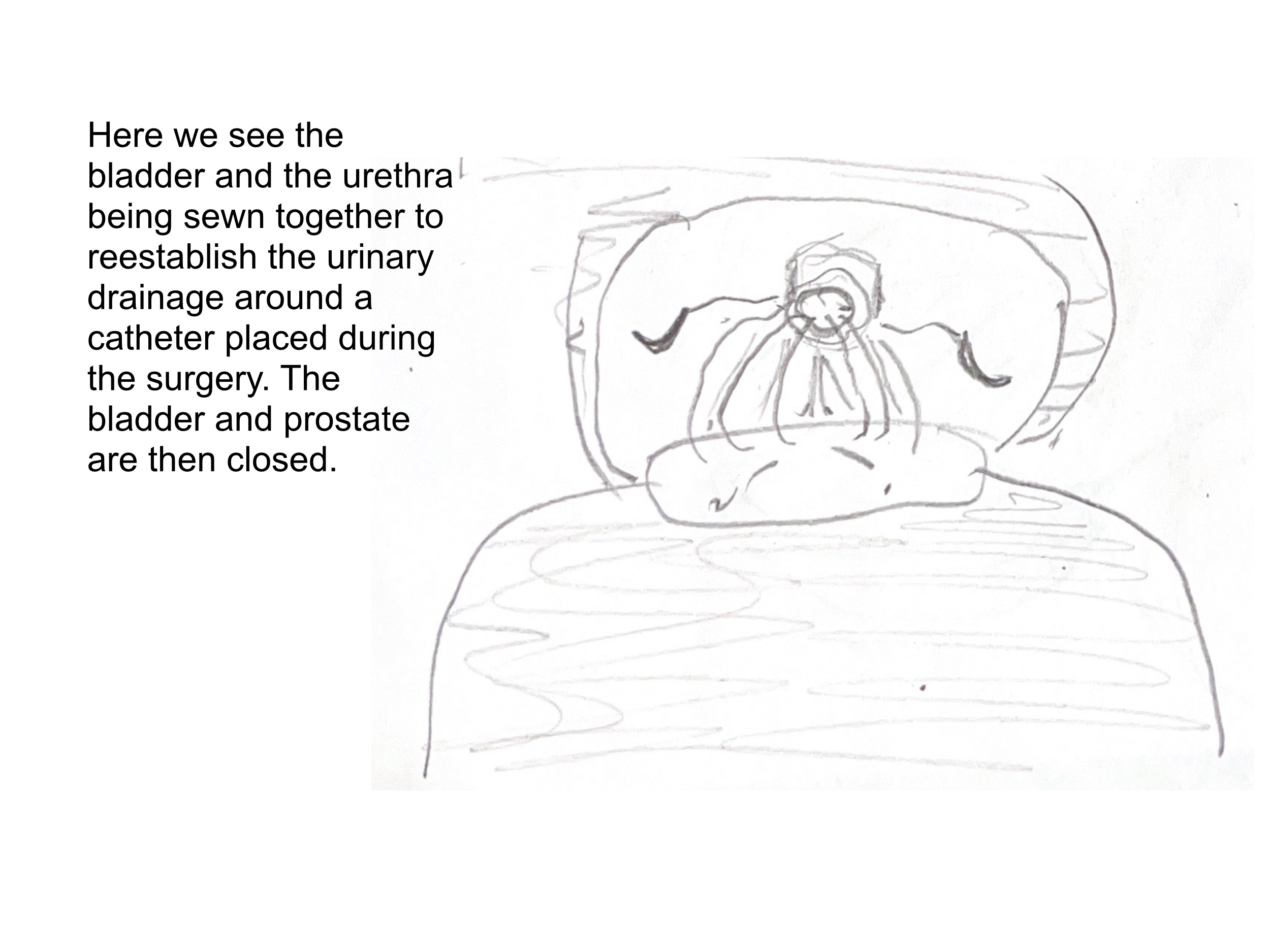
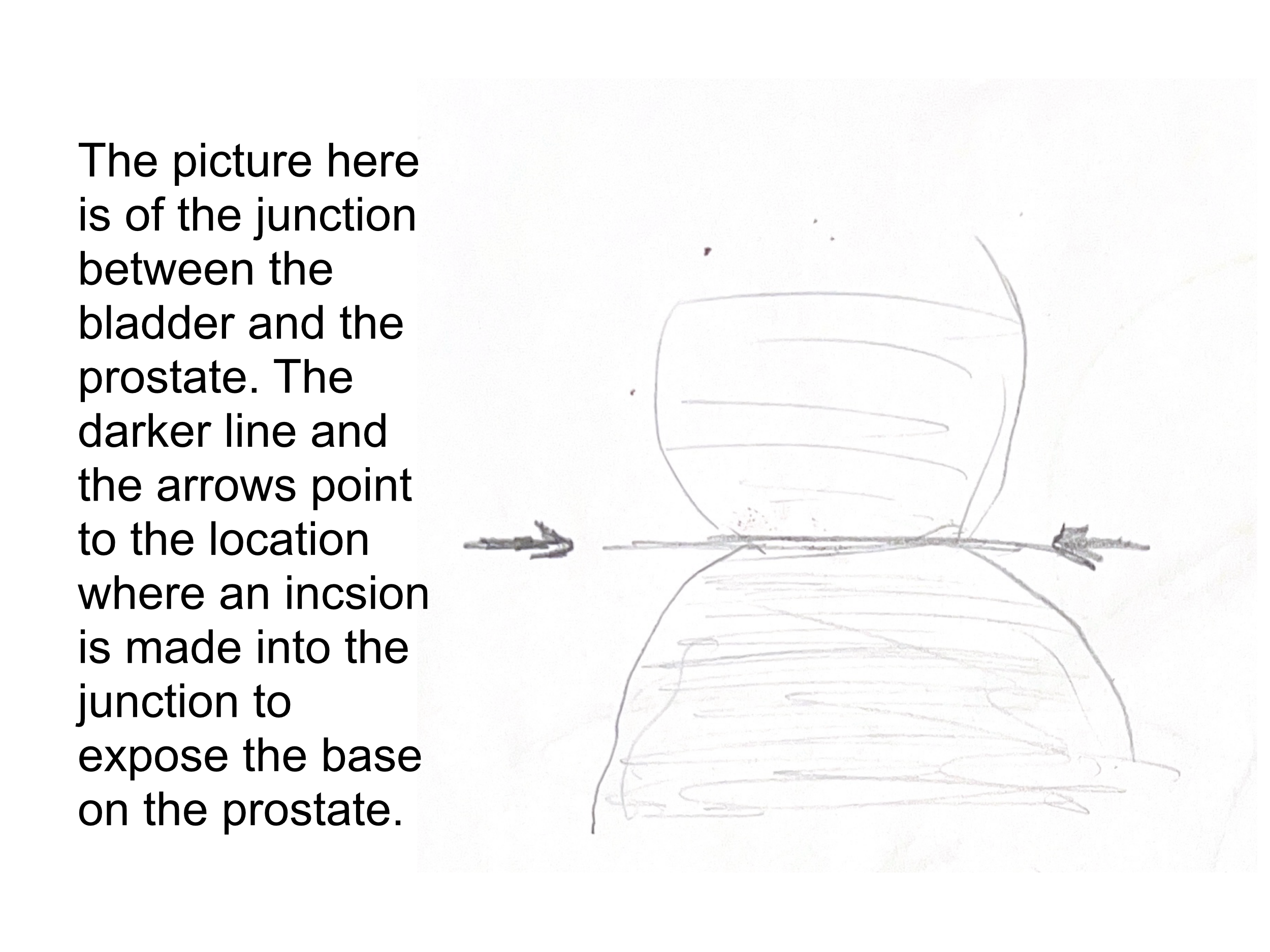
The simple prostatectomy does not remove the entire prostate, only the BPH tissue. You will have general anesthesia. The surgeon will place the robotic trocars in the abdomen and one of the trocar sites will be extended to remove the enlarged tissue. The surgeon will expose the enlarged prostate tissue through the bladder, remove the enlarged central tissue, reestablish the urethra to place a catheter, and repair the bladder. You will wake up with a catheter in place. You will stay in the hospital overnight.
What are the benefits of doing this procedure?
3
The simple prostatectomy relieves the obstruction from the enlarged prostate. Men will urinate with a stronger stream and have improvement in the ability to empty the bladder.
What are the risks of doing the procedure?
4
Bleeding: Bleeding is common during the procedure given the vascularity of the enlarged prostate tissue. Transfusions are very uncommon.
Infection: The risk for infection is moderate given the catheter.
Failure to relieve the obstruction: Most men will urinate much better after this operation.
Anesthetic Risk: Variable depending on patient age and other health problems.
Incontinence: Very uncommon with this procedure.
Sexual Function: Most commonly absence of ejaculate fluid. Erectile dysfunction is a small risk depending on preoperative status.
Are there alternatives to this procedure I should be considering?
5
Alternatives for a simple prostatectomy are the HoLEP procedure and Prostatic Artery Embolization.
Is this a common procedure?
6
This answer depends on the level of obstruction. Men with urinary retention (wearing a catheter) will want to do the procedure as soon as possible. Men with progressive urinary symptoms needing treatment can defer to an elective, convenient time.
Should I do the procedure now or what happens if I wait to do the procedure?
7
You will see your primary physician for a preoperative evaluation for surgery. You may also need to see other specialists for confirm your fitness for anesthesia. You will be asked to stop blood thinning medication. You will do a bowel preparation the day prior to the operation. You should arrange for someone to help you with cares at home for after you are discharged from the hospital.
How do I prepare for this surgery?
8
You will stay in the hospital overnight. You will go home with a catheter for one week. Most men begin light activity within 2-3 weeks and normal, heavier activty in 6-8 weeks. Men should be able to urinate right away after catheter removal with good urinary control. Transient incontinence is uncommon and will usually resolve within a couple of weeks.
How do I recover from this procedure?
9
Yes, this is a procedure covered by insurance.
Is this procedure covered by insurance?
10
Yes, this is a common procedure, but not as common with the improvement in the alternative techniques.