
daVinci Robotic Bladder Diverticulectomy FAQs
What is the diagnosis or pathology being treated by this procedure or surgery?
1
A bladder diverticulum is an outpouching of the bladder lining through a weak area of the bladder. As the bladder squeezes to empty pressure in the diverticulum causes it to grow over time. When a bladder diverticulum is too large it can cause infection, urinary retention, bladder stones, and cancer.
Can you describe the procedure or draw a picture?
2
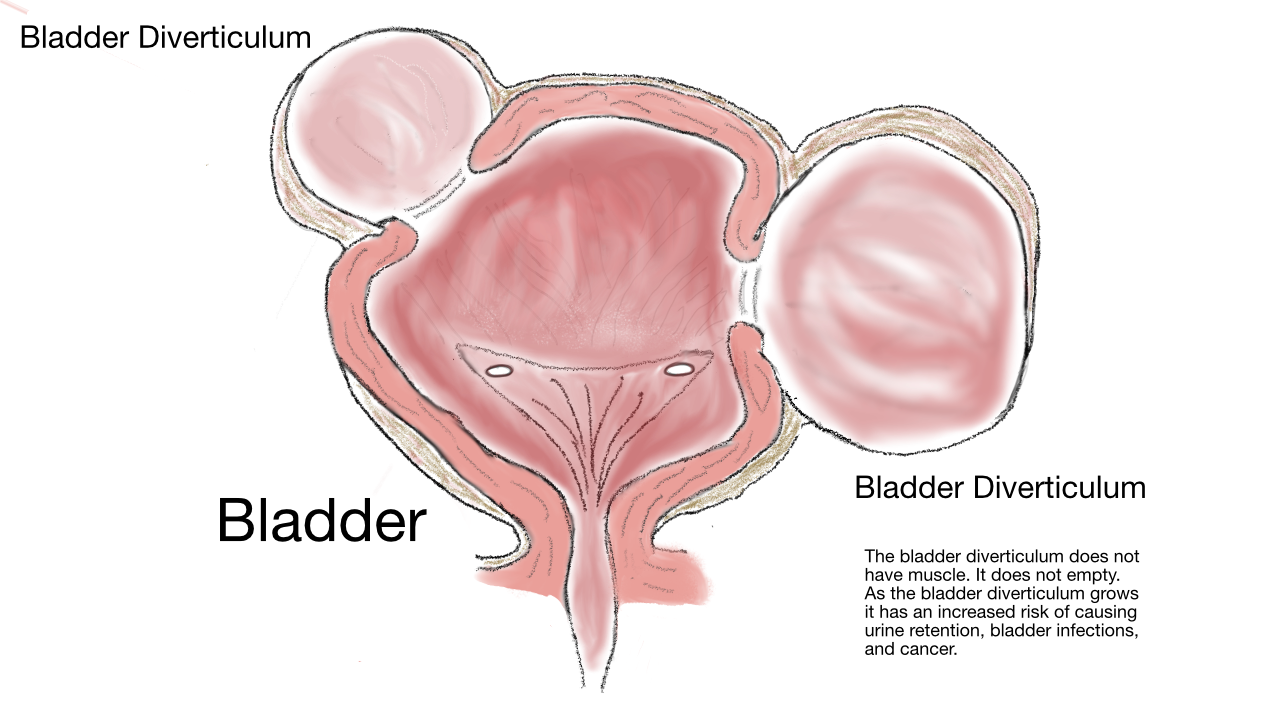
Under general anesthesia in a hospital. The daVinci robot is used to dissect and remove the diverticulum from the bladder and identify the weak hole in the bladder in order to close it. You can see the video below highlighting the key points of the procedure.
What are the benefits of doing this procedure?
3
Removing the bladder diverticulum helps to prevent the risks of infection, retention, and cancer associated with the diverticulum.
What are the risks of doing the procedure?
4
Bleeding: Bleeding risk is small for this procedure.
Infection: Infection risk is small for this procedure.
Urine Leak: If the bladder sutures break down the urine will leak
Anesthetic Risk: The risk of general anesthesia is dependent on patient health and comorbidities.
Recurrence of diverticulum: This is uncommon at the site of repair. But a diverticulum can form in another part of the bladder.
The alternative to this procedure is either to not treat the diverticulum or to do the procedure using a much larger incision. The robotic technique allows better pain control, better visualization, and less bleeding.
Are there alternatives to this procedure I should be considering?
5
Is this a common procedure?
6
This is less common than other robotic procedures but it is a straightforward procedure using standard robotic techniques.
Should I do the procedure now or what happens if I wait to do the procedure?
7
This is a discussion between you and your physician. In most cases once the diverticulum is identified as a problem it is best to proceed with surgery.
How do I prepare for this surgery?
8
You will be asked to do the standard preoperative clearance with your primary physician and any other specialists you see. You will be asked to stop blood thinners. You will not need any bowel preparation.
How do I recover from this procedure?
9
Most patients remain in the hospital overnight and leave with a catheter in place. The catheter remains most often 7-10 days. The incisions heal over a few weeks. You will be asked not to do any heavy lifting for the first few weeks after the operation.
Is this procedure covered by insurance?
10
Yes, this is a procedure that is covered by insurance.