How Kidneys Make Urine…
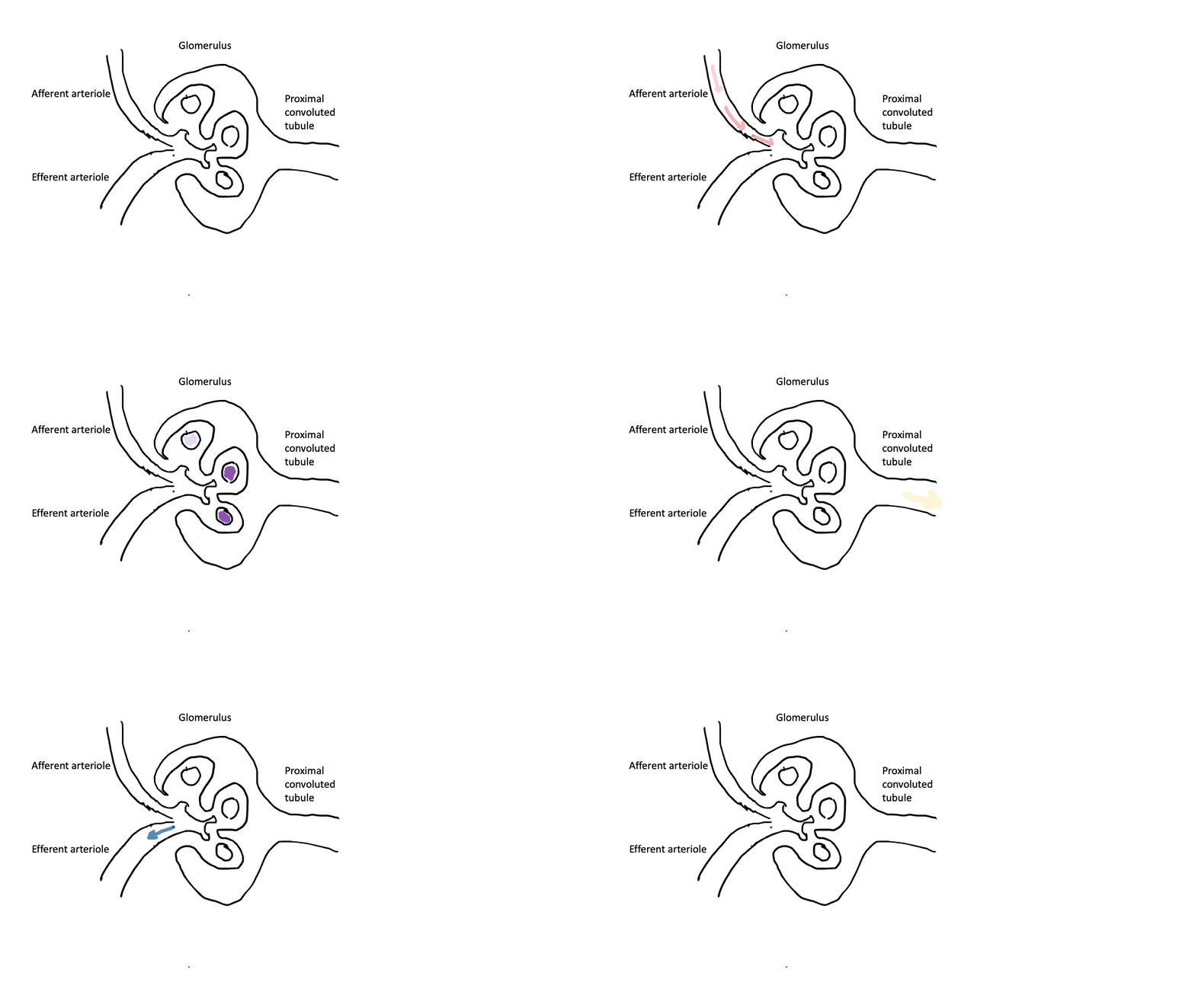
The blood enters the glomerulus through the afferent arteriole (red arrows). The glomerulus filters the blood to make urine (yellow). The filtered blood exits via efferent arteriole (blue arrow).
The nephron is the functional unit of the kidney. The glomerulus is the initial step, where the blood is initially “filtered”, allowing water, electrolytes, and small molecules to pass through small pores while retaining larger molecules and blood cells.
Much of what is initially filtered will be actively or passively reabsorbed in the rest of the nephron.
The ability of your kidneys to filter blood is measured by your blood creatinine level. From that test we can estimate your glomerular filtration rate or GFR.
The glomerular filtration rate (GFR) is a crucial indicator of kidney function, reflecting how effectively the kidneys are filtering waste products from the bloodstream.
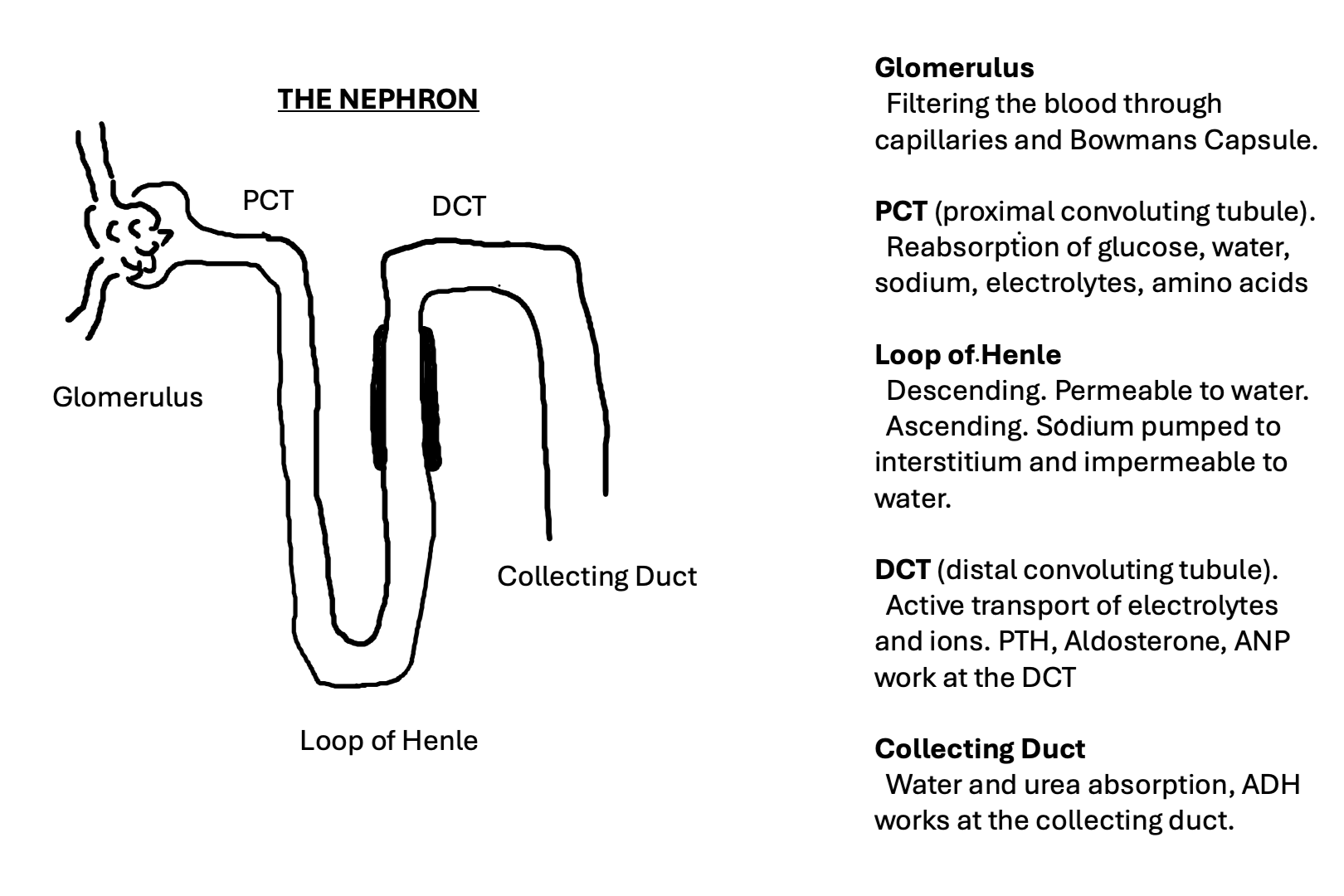
After filtering the blood at the glomerulus the rest of the nephron does the world of making urine. Urine is concentrated in waste products, but also is critical in maintaining our bodies pH level, electrolyte balance and proper water balance within the body.
The proximal convoluted tubule (PCT) reabsorbs much of what is filtered including glucose, amino acids, electrolytes. The cells lining the PCT are designed specifically for this purpose.
The Loop of Henle is designed to concentrate the urine, with active sodium transport from its thick portion of the ascending limb.
The distal convoluted tubule (DCT) has active transport critical for electrolyte balance and acid-base balance.
The collecting duct is primarily involved in concentrating the urine if needed to maintain appropriate water balance in the body.
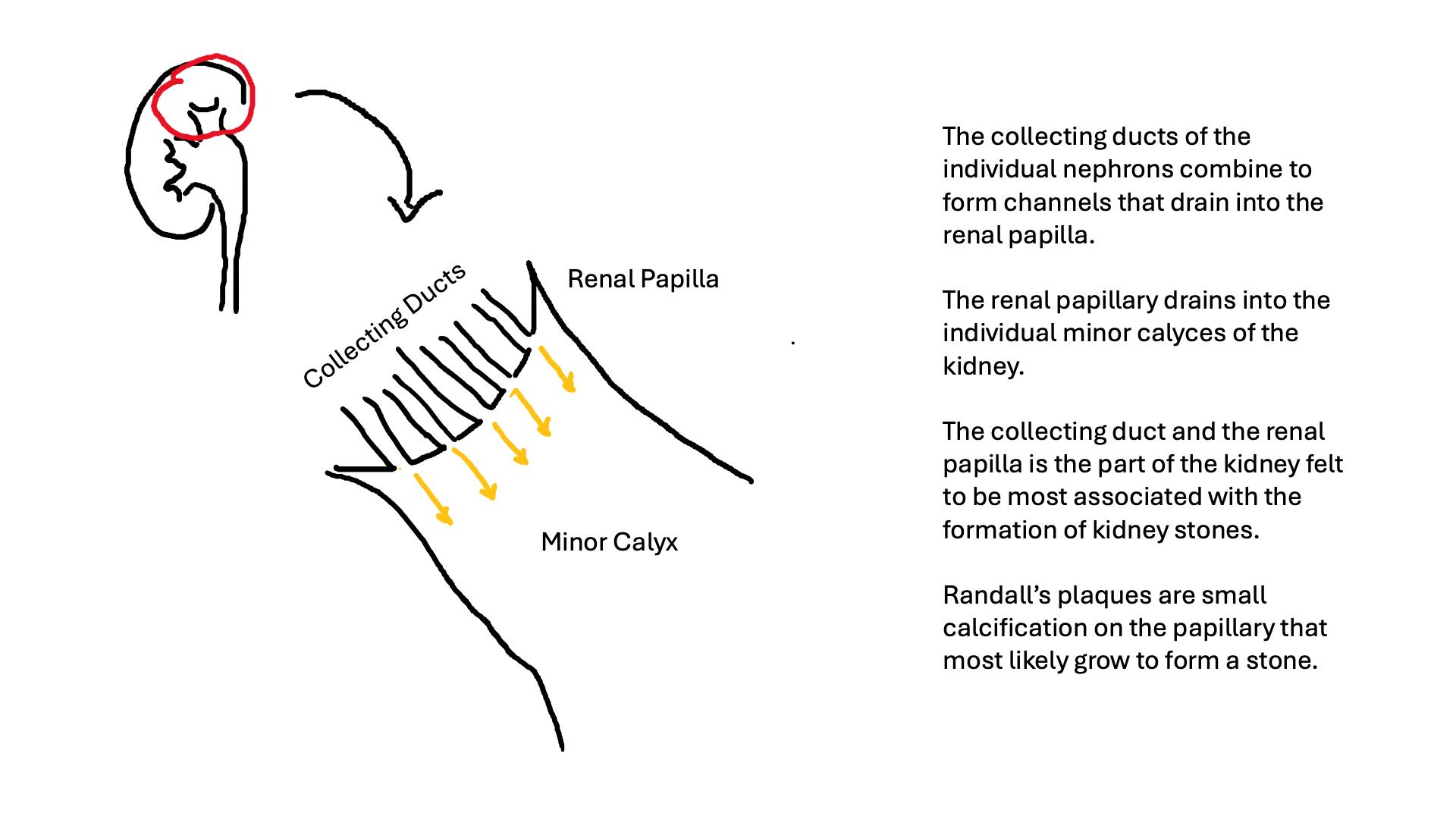
The collecting ducts of the individual nephrons combine to form channels that drain into the renal papilla.
The renal papillary drains into the individual minor calyces of the kidney.
The collecting duct and the renal papilla is the part of the kidney felt to be most associated with the formation of kidney stones.
Randall’s plaques are small calcification on the papillary that most likely grow to form a kidney stone.